 Skip to content
Introduction — The problem on the ground & the smarter solution
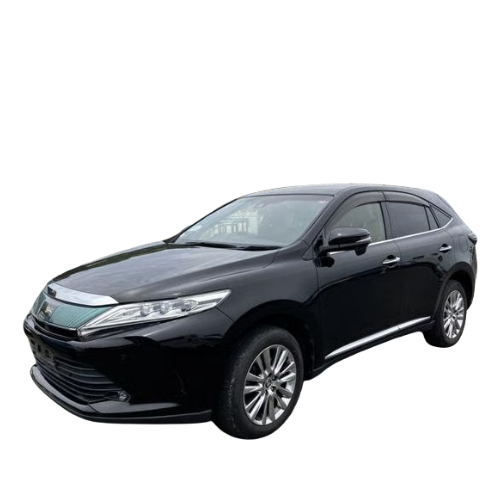
If you’ve ever walked into a Nairobi car showroom and seen a “new-shape” Toyota Harrier priced at KSh 3.5 million or more, you’re not alone in thinking “There must be a better deal.” Local dealerships often layer on large mark-ups to cover overheads, middlemen, and deferred costs — not always transparent. The result? Many Kenyan buyers end up paying significantly more than they need to, sometimes for a vehicle whose origin and condition are uncertain.
The solution is increasingly clear: instead of accepting the dealership markup, you can import directly — sourcing the same or better quality units from Japan, managing shipping, clearance and delivery through a trusted partner. The cost savings can be substantial — and the process, when done right, becomes a pathway to a better car for your money.
In this blog I’ll unpack how importing works, show you real-world price differences for models like the Toyota Harrier, the hybrid Toyota Fielder Hybrid and even a commuter favorite like the Subaru XV. I’ll reference importers’ data, official Kenya Revenue Authority (KRA) rules, and end with how Shalommbugua Automobile can make this smooth for you.
1. The Local Dealership Benchmark: How Much Are Kenyans Paying?
When you check the Kenyan market today, you’ll find:
-
- The Toyota Harrier in Kenya (used foreign-used, 2017–18) is listed between KSh 3.6 m – 4.8 m and more depending on year & hybrid trim. SUVHUB Kenya+2Elisa Motors+2
- The Toyota Harrier in Kenya (used foreign-used, 2017–18) is listed between KSh 3.6 m – 4.8 m and more depending on year & hybrid trim. SUVHUB Kenya+2Elisa Motors+2
-
- The lowest price for a new shape Toyota Harrier in Mombasa is 3.5 million.
These high local prices often reflect import tax + dealer markup + margin rather than purely vehicle origin cost.
- The lowest price for a new shape Toyota Harrier in Mombasa is 3.5 million.
-
- Why pay more locally while you can save a lot of money importing for as low as 2.99 million to import a 2019 Harrier via Shalommbugua Automobile.
2. Importing From Japan: What the Data Says
2.1 Origin of Imports
Kenya imports approximately 70,000 to 80,000 vehicles annually; around 94.3% of used-car imports come from Japan. Business Daily+1
This means sourcing vehicles from Japanese auctions (via export houses) is entirely mainstream — and the groundwork for large cost advantages.
2.2 How are Cars Imported
2.3 Real-World Import Example: Toyota Harrier
- The cheapest one can get for a new shape harrier is usually at Mombasa is 3.5 million for a 2019 model.
- If you import via Shalommbugua Automobile is 2.99 million for a 2019 Harrier.
- See you save 500,000+ kenya shillings by importation.
2.4 Hybrid Toyota Fielder Case
- Lowest Local price can get for a 2019 Fielder Hybrid is 1.8million
- Importing a 2019 fielder hybrid will cost you not more than 1.56 million
- Yet again we see you have saved 200,000+ Kenyan shillings
3. Why Importing Through a Trusted Specialist Matters
Because yes — the savings are real, but you must execute well. Risks include hidden fees, improper documentation, incorrect tax handling, poor condition vehicles, etc. Here’s where a specialist like Shalommbugua Automobile adds value:
-
- We source verified vehicles from trusted Japanese auctions, with clear history.
-
- We handle shipping, insurance, freight and provide full cost breakdown.
-
- We navigate KRA requirements (age limits, right-hand drive, KS1515 inspection) to avoid clearance delays. Kenya Revenue Authority
- We navigate KRA requirements (age limits, right-hand drive, KS1515 inspection) to avoid clearance delays. Kenya Revenue Authority
-
- We deliver your vehicle to Kenya with full transparency — no hidden middlemen, no unexpected fees.
4. Importation vs Buying Locally — A Side-by-Side Comparison
| Comparison | Local Dealership | Import via Shalommbugua Automobile |
| Price paid | KSh 4.3m+ (for Harrier) locally Elisa Motors+1 | Import cost example ~KSh 2.99m 2019 Harrier via Shalommbugua Automobile. |
| Vehicle origin transparency | Often unknown or mixed | Fully verified from Japan |
| Middle-man mark-ups | Pricier due to dealership overhead | Lower margin, direct sourcing |
| Tax & import clarity | May include hidden costs | Full cost breakdown shown upfront |
| Choice & condition | Limited to stock dealership has | Broad access to auction inventory |
| Delivery & support | Standard local warranty (if any) | End-to-end handling & delivery |
As you can see, for many buyers the import route — when managed properly — offers the same car, better condition, and for less money than buying locally.
5. How to Get Started With Shalommbugua Automobile
-
- Tell us your budget, preferred model (Harrier, Fielder Hybrid, etc.) and specification (year, mileage, options).
- Tell us your budget, preferred model (Harrier, Fielder Hybrid, etc.) and specification (year, mileage, options).
-
- We send you a selection of verified units with full auction‐sheet, condition report, and CIF estimate.
-
- You pick a vehicle. We agree all cost breakdowns.
-
- We ship, clear via KRA/KEBS, deliver to your doorstep in Kenya.
-
- You drive your car — confident, fully documented and worry-free.
✅ Final Word
Don’t let dealership mark-ups or opaque pricing steal your dream car. With importation you access global inventory, avoid inflated local pricing, and take advantage of transparent sourcing. The figures clearly show that models like the Harrier and Fielder Hybrid can be significantly cheaper via import — and you don’t have to compromise on quality.
If you’re ready to explore your next car import, choose a partner who knows the process, handles the details, and puts you in control. Choose Shalommbugua Automobile — where your dream vehicle becomes your ride, not your regret
